
 Korea
Korea
 Japan
Japan
 USA
USA




The Untold Story of Snowboarding: From Survival Tool to Global Sport
The Game of Descent
Every winter, millions of riders strap into their snowboards and carve their way down
snow-covered mountains.
The crisp air, breathtaking alpine scenery, and the feeling of floating across fresh
powder create an experience unlike any other. But have you ever wondered how
snowboarding began?
Behind every modern snowboard lies a fascinating history filled with innovation,
determination, and a handful of visionaries who transformed a simple idea into one of
the world's most popular winter sports.

Snowboarding Started as a Survival Tool
Like many sports throughout history, snowboarding traces its origins back to necessity
rather than recreation.
For people living in snowy mountain regions, traveling across deep snow was essential
for hunting and survival. Running through heavy snow was exhausting, so early
methods of gliding across the terrain gradually evolved into simple wooden boards
that made winter travel faster and more efficient.
Some of the earliest recorded examples resembled long wooden planks with ropes
attached to the front. During the 1950s, hunters in parts of the United States used
these boards to maintain balance while moving through snow-covered landscapes.
Primitive as they were, these boards introduced the basic concept that would
eventually become modern snowboarding.
The Birth of the Snurfer
Modern snowboarding officially began in 1965 thanks to an American engineer from
Michigan named Sherman Poppen.
The idea was surprisingly simple.
Looking for a unique Christmas gift for his daughter, Poppen bolted two skis together
and created a board that riders could stand on sideways while holding a rope attached
to the front for balance.
He called his invention the Snurfer—a combination of the words snow and surfer.
What started as a homemade gift quickly became a nationwide success.
Over the next fifteen years, more than 750,000 Snurfers were sold, introducing an
entirely new way for people to enjoy winter.
Although basic by today's standards, the Snurfer laid the foundation for modern
snowboarding.

Building the Modern Snowboard
If Sherman Poppen introduced the idea, Dimitrije Milovich helped turn it into a
legitimate industry.
Inspired after sliding down snowy hills in New York on a cafeteria tray, Milovich
envisioned equipment specifically designed for riding snow rather than simply
adapting existing skis.
He founded Winterstick, one of the world's first snowboard companies, and
developed boards that closely resembled today's designs.
Winterstick gained international attention and sold products in eleven countries.
Unfortunately, financial difficulties and the challenges of continuous product
development eventually forced the company to close during the late 1980s.
Its influence, however, lived on.
The Pioneers Who Changed Everything
The next generation of innovators pushed snowboarding even further.
Among them was Jake Burton Carpenter, whose name has become synonymous with
modern snowboarding.
After discovering the Snurfer as a teenager, Burton recognized its potential and began
improving every aspect of the design.
His company introduced innovations including improved bindings, flexible boots, and
equipment that offered greater stability, comfort, and control. These developments
made snowboarding safer, more accessible, and far more enjoyable.
Another legendary figure was Tom Sims.
Originally a skateboarding champion, Sims brought creativity and style into
snowboarding. He won the 1983 Snowboard World Championship and founded Sims
Snowboards, producing equipment that inspired an entirely new generation of riders.
His influence extended beyond competition.
In 1985, Sims served as the snowboard stunt double in the James Bond film A View to
a Kill, introducing millions of moviegoers to a sport that was still relatively unknown.

[Jake Burton Carpenther]
Winning Acceptance
Despite rapid technological progress, snowboarding wasn't immediately welcomed by
the winter sports community.
Skiing had already established itself as a prestigious sport, while snowboarding was
often associated with youth culture, bold fashion, and unconventional riding styles.
Many ski resorts across North America refused to allow snowboarders on their slopes
throughout the 1980s.
Some resorts that did permit snowboarding required riders to pass skill tests before
granting access.
Yet these restrictions only strengthened the community.
Snowboarders continued pushing the sport forward, organizing competitions,
developing new tricks, and building a culture centered on creativity, freedom, and
progression.
As terrain parks and halfpipes became more common, spectators were captivated by
aerial tricks and technical riding that skiing had rarely showcased before.
Interest grew rapidly around the world.
Becoming an Olympic Sport
One of the greatest milestones in snowboarding history arrived in 1998, when
snowboarding made its Olympic debut at the Nagano Winter Olympics.
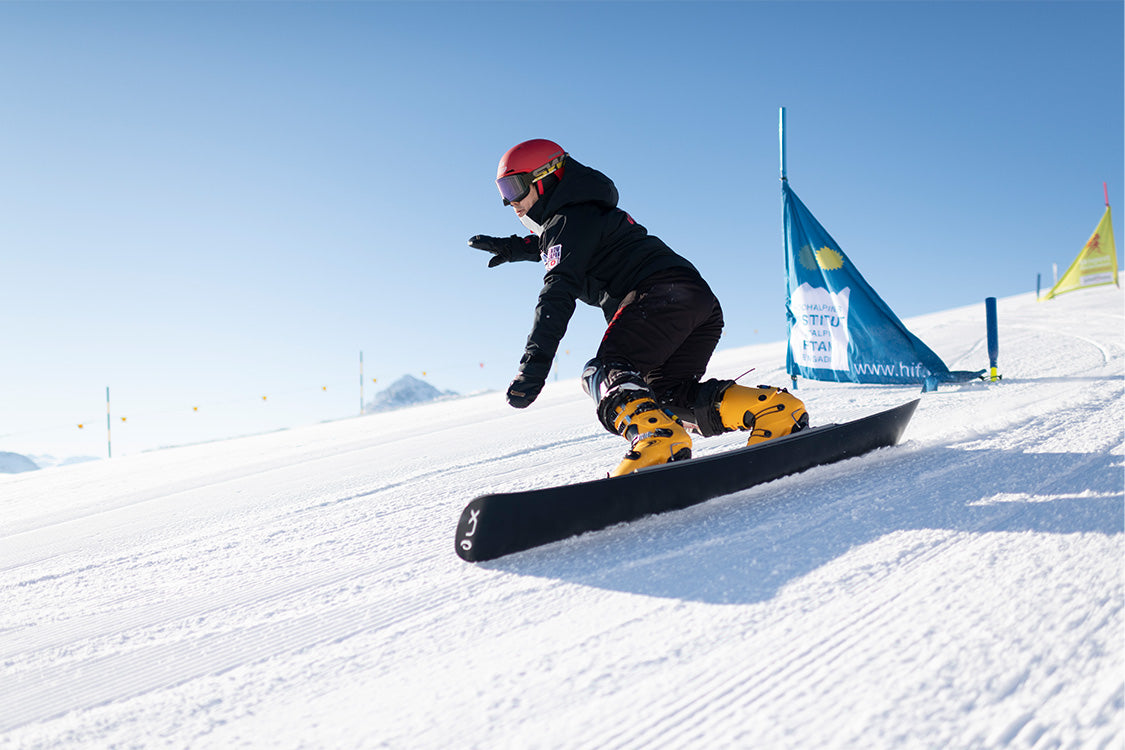
The inclusion of Giant Slalom and Halfpipe officially established snowboarding as a
world-class competitive sport.
Since then, the discipline has continued to evolve.
Today's Olympic events include:
-
Halfpipe, where riders perform tricks inside a giant U-shaped course.
-
Slopestyle, featuring rails, boxes, and jumps that reward creativity and technical ability.
-
Snowboard Cross, an action-packed race across challenging terrain with multiple competitors.
-
Big Air, where riders launch from massive jumps to perform spectacular aerial tricks.
Each discipline highlights a different side of the sport while sharing the same spirit of
innovation and progression.
More Than a Sport
Snowboarding has never been only about speed or competition.
It represents freedom, self-expression, and the courage to explore new lines where
others see obstacles.
From handmade wooden boards and homemade prototypes to Olympic podiums and
world-class mountain resorts, snowboarding has evolved through decades of
imagination, perseverance, and countless riders who refused to accept limits.
Every turn, every jump, and every fresh track carries a small part of that remarkable
history.
The next time you buckle into your snowboard, remember that you're not just riding a
board.
You're becoming part of a story that has been carving its way through winter for more
than half a century.
About BLACKBRIAR Magazine
BLACKBRIAR Magazine celebrates the people, places, and stories that shape the world
of outdoor adventure. Through inspiring athletes, iconic destinations, and the history
behind action sports, we explore what it truly means to live beyond limits.



コメントを書く
このサイトはhCaptchaによって保護されており、hCaptchaプライバシーポリシーおよび利用規約が適用されます。